
This is Part 1 of our 10-part series on transforming client intake for family law practices.
It's 9:47 PM on a Tuesday. Someone just Googled "divorce attorney near me" for the third time this week. Their hands are shaking as they dial your number. They're terrified, angry, confused – maybe all three at once.
Your phone rings.
And rings.
Then voicemail picks up.
They hang up and call the next firm on the list.
You just lost a $15,000 retainer to a competitor who happened to answer their phone.
The Emotional Reality of Family Law Calls
Here's what we've learned working with dozens of family law practices: your potential clients aren't shopping for shoes. They're calling because their world is falling apart.
Someone going through a divorce isn't thinking rationally about leaving a detailed voicemail. They're worried their spouse might check their phone records. They're embarrassed about their situation. They're emotionally exhausted from finally working up the courage to make that first call.
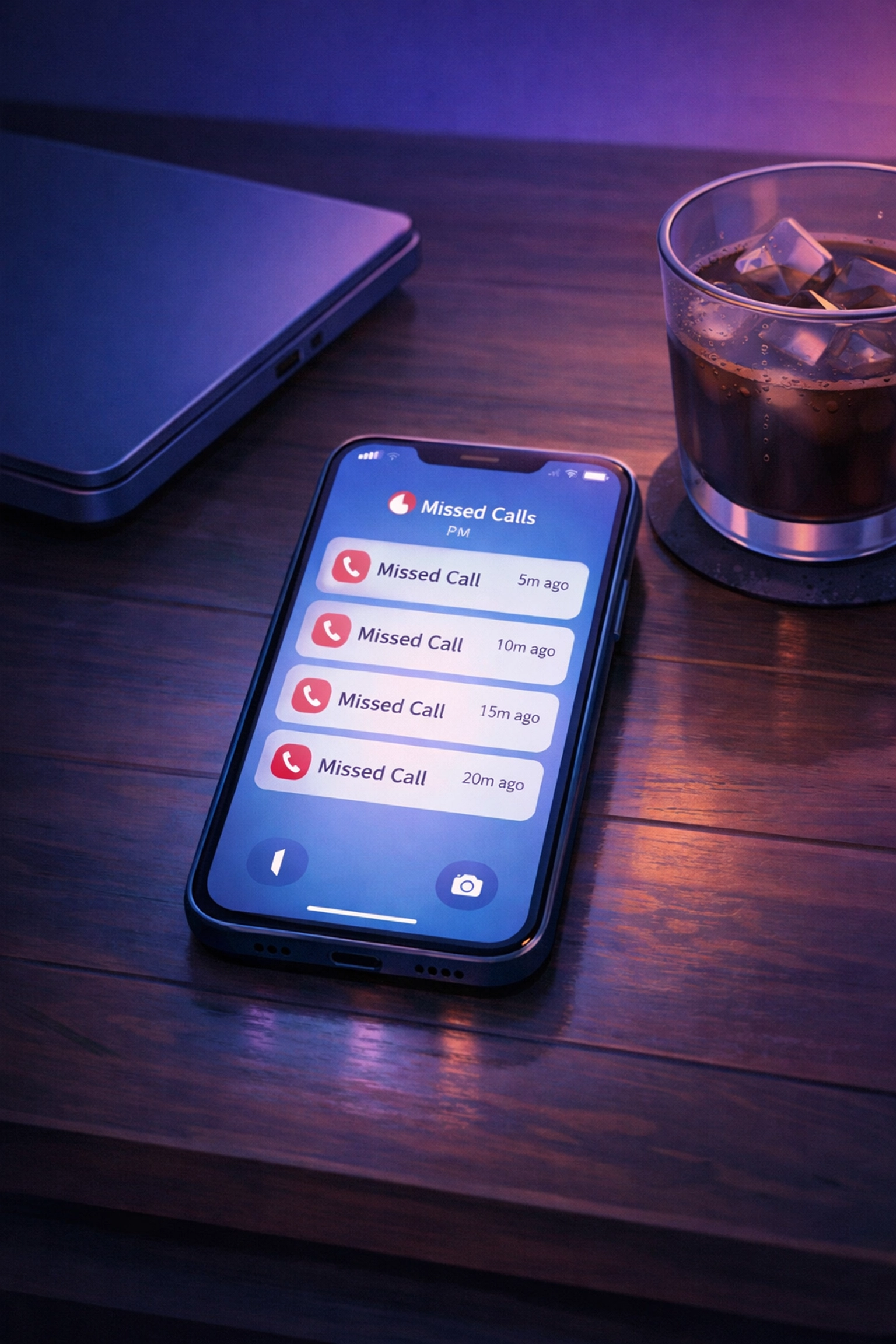
When they hit voicemail, that courage evaporates. The moment passes. They move on.
In family law – whether it's divorce, custody battles, or domestic violence cases – timing isn't just important. It's everything. The person who calls you at 10 PM on Sunday isn't going to wait until Monday morning to hear back. They need help now, and they'll find someone who can provide it.
The Leaking Bucket Problem
Think of your marketing budget as water you're pouring into a bucket. You're spending thousands on Google Ads, SEO, directory listings, maybe even billboards. All that investment is filling your bucket with quality leads.
But there's a massive hole in the bottom.
Every unanswered call is money pouring straight through that hole. And in family law, the leak is worse than most practice areas because these callers simply won't leave messages.
We've seen the data: family law leads are 3-4 times less likely to leave a voicemail compared to other legal practice areas. They're dealing with sensitive, private matters. They're often calling from situations where they can't safely leave detailed information on a recording.
The math is brutal. If you're spending $5,000 a month on marketing and converting 20% of your leads, but you're missing 60% of calls that come in after hours or when you're in court, you're effectively throwing away $3,000 every single month.
When Most Family Law Calls Actually Happen
Here's the uncomfortable truth about family law client behavior: they don't call during business hours if they can avoid it.
They call when they're alone. When the kids are asleep. When their spouse is out. When they finally have the privacy and mental space to reach out for help.

Our data shows that 43% of family law inquiries come in outside traditional 9-5 hours. That's nearly half your potential clients calling when you're:
- Having dinner with your family
- In the middle of a trial
- Actually getting some sleep
- Living your life outside the office
And every single one of those after-hours calls is going to voicemail. Where they die.
Why Traditional Solutions Fall Short
"But I have an answering service," you might be thinking.
We get it. Traditional call centers and answering services have been the go-to solution for decades. But here's where they're failing family law firms specifically:
The script problem: Generic receptionist scripts don't work for emotionally charged family law calls. When someone calls crying about a custody issue, they need empathy and appropriate guidance – not a robotic "please leave your name and number."
The cost problem: Good legal answering services charge $2-5 per call. If you're getting 200+ calls a month, that's $400-$1,000 just to capture basic information. And they still miss nuances that an AI receptionist trained specifically for legal intake can catch.
The inconsistency problem: Different operators handle calls differently. Your caller experience varies wildly depending on who picks up. There's no learning, no improvement, no optimization.
The Speed-to-Lead Reality
There's research from the legal marketing world that should terrify every family law attorney: the firm that responds first wins the client 78% of the time.
Not the most qualified firm. Not the one with the best reviews. The one that answers the phone first.

When someone is ready to hire a family law attorney, they're in crisis mode. They need help immediately. If you don't answer, they're not waiting – they're calling down their list until someone picks up.
This is where an ai receptionist changes everything. Not in six months. Not eventually. The second you implement it.
What Makes Family Law Different
We've worked with firms across multiple practice areas, and family law stands out for a specific reason: the emotional barrier to that first call is enormous.
Think about it – calling a personal injury attorney after a car accident is straightforward. Calling a business attorney about a contract is transactional.
But calling about your divorce? About losing custody of your kids? About escaping an abusive relationship?
That takes everything someone has.
When they finally work up the courage to make that call and get voicemail, it's not just a missed lead. It's a person in crisis who you couldn't help because you were unavailable. And they're unlikely to try again.
The 24/7 Imperative
Here's what an effective law firm answering service needs to do for family law practices specifically:
Answer every call: Not most calls. Not business-hour calls. Every. Single. Call. At 2 AM. On holidays. During your daughter's wedding. Someone needs to pick up.
Sound human: Generic "I'll take a message" responses don't cut it. The voice on the other end needs to convey empathy, understanding, and professionalism – especially in family law where callers are vulnerable.
Qualify appropriately: Not every caller is a good fit. Your intake system needs to ask the right questions to identify case type, urgency, conflict checks, and basic qualifying factors without making distressed callers jump through hoops.
Respect sensitivity: Family law callers need assurance about confidentiality. They need to know their information is secure. They need to feel safe sharing difficult details.
The AI Advantage We're Building
This is where we get excited about what's happening with AI voice technology right now.
An after hours answering service powered by AI doesn't get tired. It doesn't have a bad day. It doesn't transfer to voicemail when it gets busy. It learns from every conversation and gets better at handling the specific nuances of family law intake.

We've trained our system on thousands of family law consultations. It knows how to respond when someone is crying. It understands the urgency signals that mean "this person needs to speak with an attorney within 24 hours." It can gather essential information while being genuinely empathetic.
And here's the part that transforms practices: it works 24/7/365 for a fraction of what you're spending on traditional answering services – while actually converting more callers into consultations.
What Happens Next
In this series, we're diving deep into exactly how AI receptionists are transforming family law client intake. We're not just talking about answering phones – we're talking about being there for people in their worst moments and converting that first interaction into long-term client relationships.
In Part 2, we'll explore the speed-to-lead game in divorce law specifically, and why winning that race to respond can literally make or break your practice growth.
Because at the end of the day, every missed call is someone who needed help and went somewhere else to find it.
That stops now.
Want to see how an AI receptionist handles sensitive family law calls? Explore our solution and stop losing leads to voicemail.